
 by
Introduction
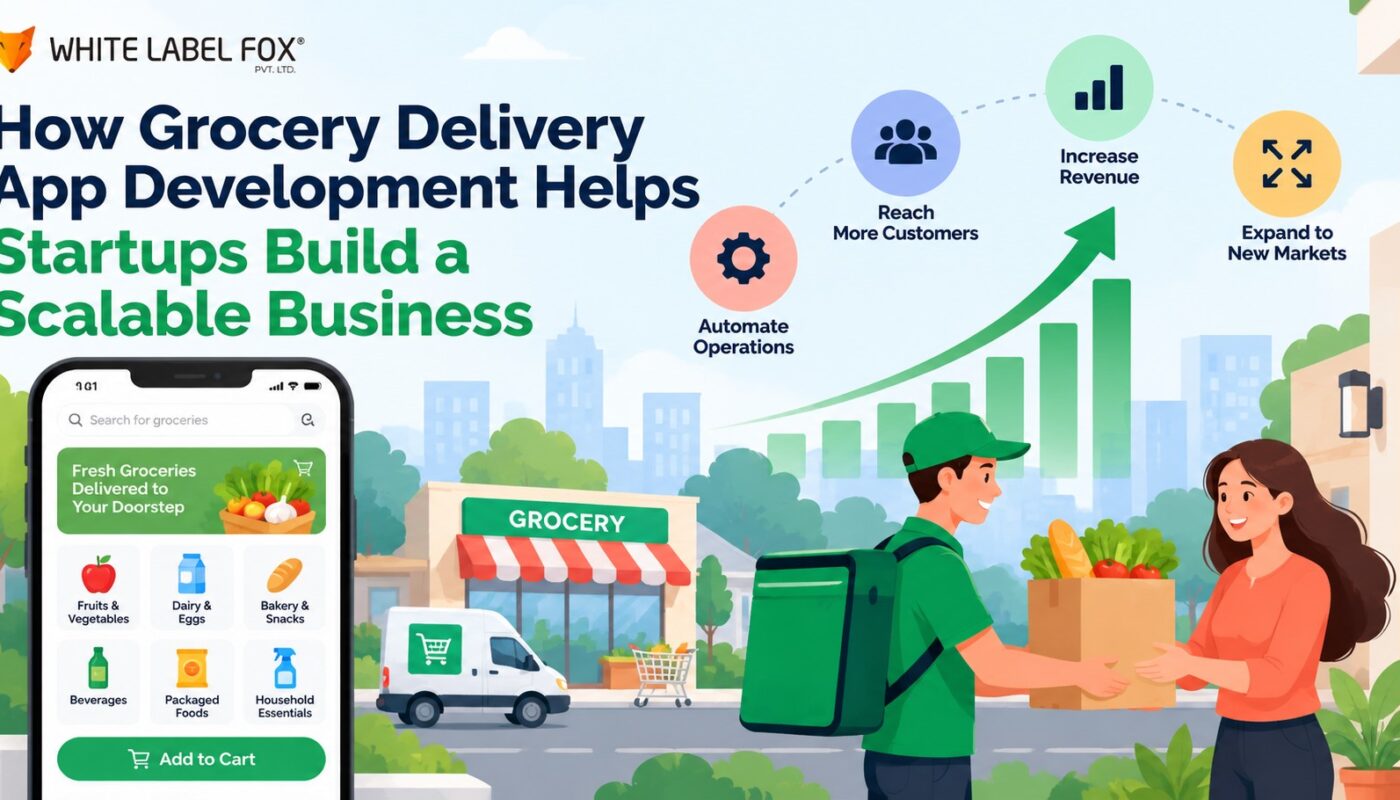
Online grocery shopping has become a convenient option for customers who want to order everyday essentials without visiting physical stores. From fresh fruits and vegetables to packaged foods, dairy products, and household supplies, customers increasingly expect quick ordering, flexible delivery options, and reliable service.
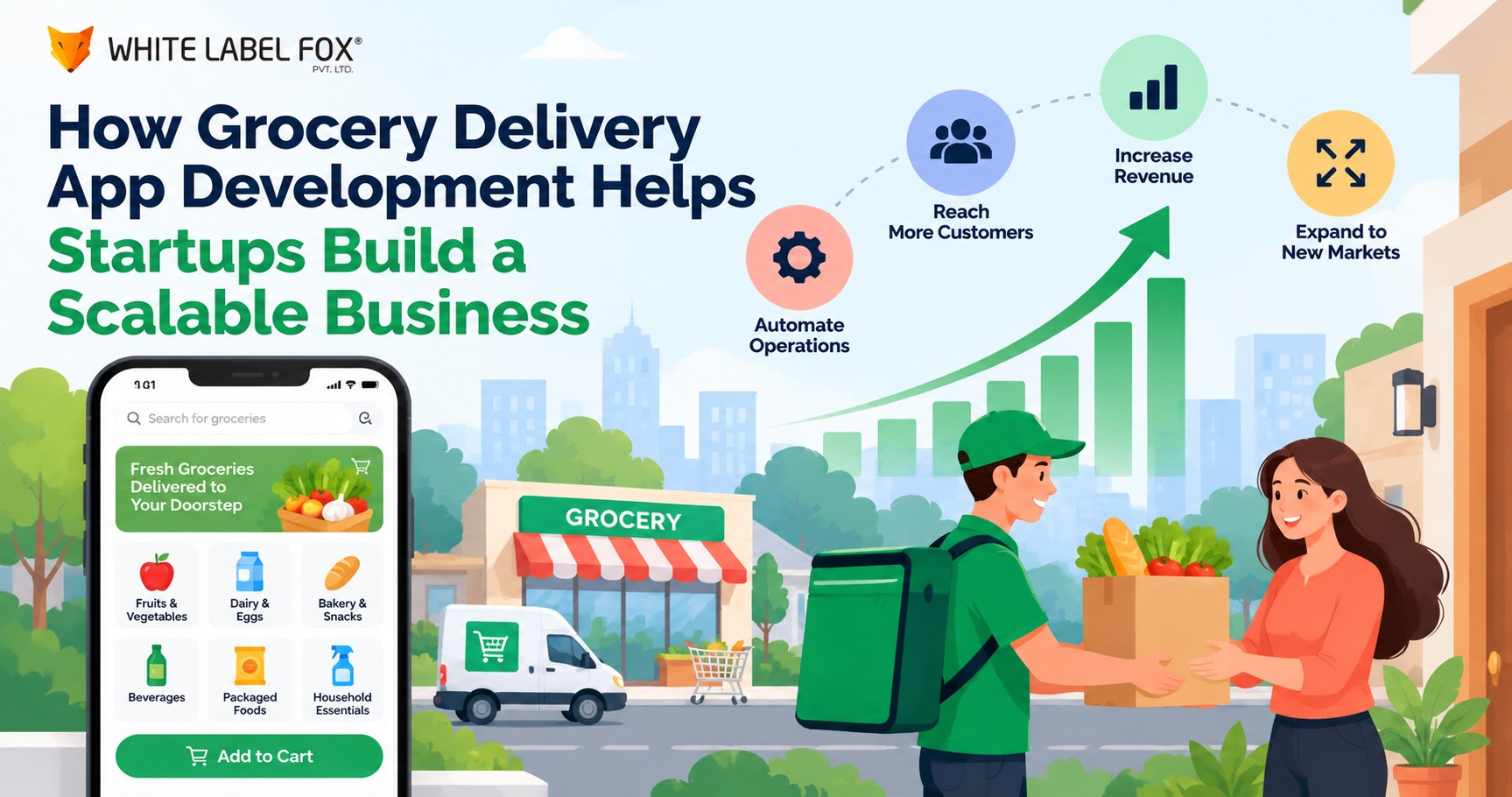
For startups and entrepreneurs, this shift creates opportunities to enter the online grocery market with a digital platform. However, building a successful grocery business requires more than offering products through an app. Businesses need an efficient way to manage orders, coordinate deliveries, maintain inventory, and provide a consistent customer experience.
Grocery Delivery App Development helps businesses bring these operations together in one platform. It allows startups to establish an online presence, connect customers with grocery retailers, and expand their services as demand grows.
With the right business model and a scalable grocery delivery app solution, startups can begin in a specific location, understand customer preferences, and gradually expand into new markets. Choosing the right development approach also helps businesses launch their services efficiently while keeping future growth in mind.
What Is Grocery Delivery App Development?
Grocery Delivery App Development involves creating a digital platform that enables customers to browse grocery products, place orders, make payments, and receive deliveries. Depending on the business model, the platform may serve individual grocery stores, multiple retailers, local supermarkets, or a dedicated grocery delivery business.
A typical platform includes three main interfaces:
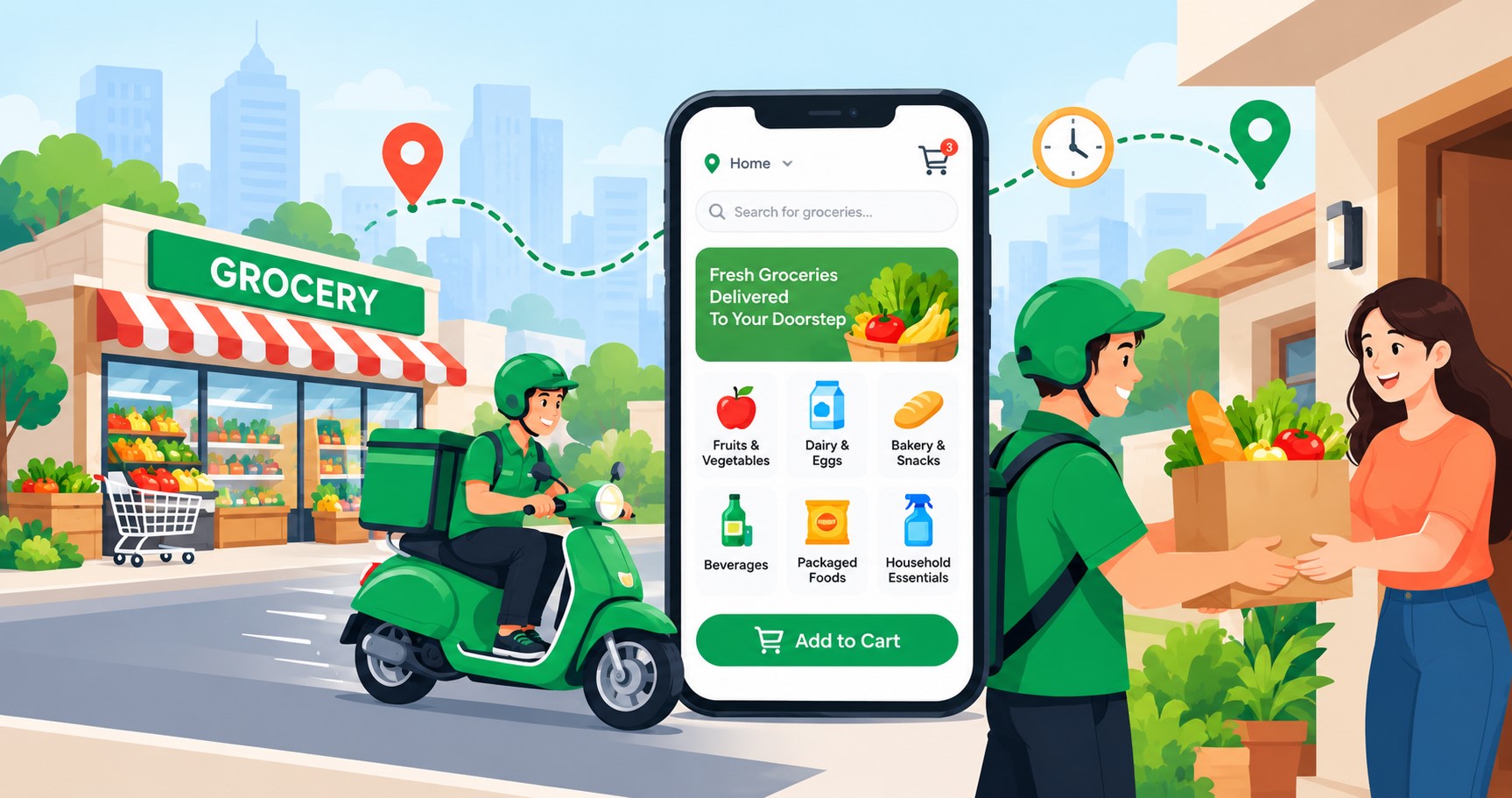
- Customer app: Allows users to explore products, compare options, manage shopping carts, select delivery slots, and track orders.
- Delivery partner app: Helps delivery personnel accept assigned orders, view pickup and delivery details, and update delivery statuses.
- Admin panel: Enables business owners to manage customers, products, store partners, orders, promotions, and overall platform operations.
Some businesses also provide a dedicated dashboard for grocery stores to manage their product listings, stock availability, and incoming orders.
The process is straightforward. Customers select products and place orders through the app. The relevant store or business confirms availability and prepares the order. A delivery partner collects the items and delivers them to the customer.
This approach gives startups a structured way to manage online grocery operations while creating a convenient shopping experience for customers.
How Grocery Delivery Apps Help Startups Scale Their Business
1. Start Small and Expand Gradually
Startups do not need to launch their services across an entire country from the beginning. They can start with a specific neighborhood, city, or group of grocery stores and expand as demand increases.
For startups planning to enter the online grocery market, a BigBasket Clone App model can provide a useful reference for organizing a broad product catalog and serving customers through a digital shopping platform. Businesses can start with essential grocery categories and expand their product range as customer demand grows.
Grocery Delivery App Development supports this gradual expansion by giving businesses a central platform for managing orders and operations across different service areas.
This approach allows entrepreneurs to test their business model, identify operational challenges, and make informed decisions before entering larger markets.
2. Automate Daily Grocery Operations
Managing grocery orders manually becomes difficult when order volumes increase. Businesses may face missed orders, incorrect deliveries, inventory discrepancies, and communication delays.
A digital platform helps organize these activities in one place. Business owners can monitor incoming orders, assign deliveries, update product availability, and review order statuses without depending entirely on manual coordination.
Automation also reduces repetitive administrative work and helps teams handle more orders with greater consistency.
For startups, this creates an opportunity to increase operational capacity without making every business process more complicated as the customer base grows.
3. Reach More Customers Through Digital Channels
A physical grocery store primarily serves customers within its immediate surroundings. An online platform allows businesses to reach customers across their defined delivery zones.
Customers can discover products, place orders from home, and schedule deliveries according to their preferences. Businesses can also use push notifications, promotional campaigns, and personalized offers to encourage repeat purchases.
A well-planned On-demand Grocery Delivery App can help startups connect with customers who value convenience and reliable service.
Over time, customer purchase patterns can provide useful insights into product demand, shopping frequency, and promotional performance. Businesses can use these insights to improve product selection and create more relevant marketing campaigns.
4. Improve Inventory and Order Management
Inventory management is particularly important in the grocery industry because products have different shelf lives, storage requirements, and demand patterns.
A suitable platform can help store managers update stock availability, organize product categories, and monitor incoming orders. Features such as low-stock alerts and inventory tracking can also help businesses respond to changing demand.
For products such as fruits, vegetables, dairy items, and bakery goods, accurate availability information is essential to maintaining customer trust.
By improving visibility into inventory and order activity, Grocery Delivery App Development helps businesses reduce avoidable order cancellations and improve coordination between stores and delivery teams.
5. Build a Better Customer Experience
Customer experience has a direct impact on repeat purchases. Customers are more likely to return when they can find products easily, place orders without confusion, and receive accurate deliveries.
A good grocery app should offer simple navigation, clear product information, secure payment options, saved addresses, order tracking, and timely notifications.
Features such as scheduled delivery, order history, and quick reordering can make routine shopping more convenient.
Businesses should also provide a clear process for handling unavailable products, substitutions, refunds, and customer complaints. These practical details matter because grocery orders often include items customers need regularly.
A consistent experience helps startups build customer loyalty and develop a stronger position in competitive local markets.
Key Features of a Scalable Grocery Delivery App
The features included in a grocery platform should support both current business requirements and future expansion. The following capabilities are particularly useful for startups.
Customer App Features
- User registration and profile management: Allows customers to create accounts, save addresses, and manage preferences.
- Product search and categories: Helps users find groceries through organized listings, filters, and search functionality.
- Shopping cart and checkout: Makes it easy to review products, update quantities, and confirm orders.
- Multiple payment options: Supports convenient transactions through available digital payment methods and cash on delivery where appropriate.
- Real-time order tracking: Keeps customers informed about order preparation and delivery progress.
- Offers and notifications: Communicates relevant promotions, order updates, and special offers.
- Order history and reordering: Simplifies repeat purchases of frequently purchased products.
Delivery Partner Features
Delivery partners need tools that make order fulfillment easier and more organized. Useful features include order assignment, pickup instructions, navigation support, delivery status updates, and earnings summaries.
For businesses targeting quick-commerce customers, a Blinkit Clone App model highlights the importance of efficient order assignment, local inventory availability, and timely delivery updates. These capabilities help startups organize last-mile operations and provide a more convenient shopping experience within their service areas.
These capabilities help delivery teams manage their responsibilities and provide customers with more accurate delivery updates.
Admin Panel Features
The admin panel gives business owners visibility into the entire operation. It should support customer management, store and delivery partner management, product listings, order monitoring, promotional campaigns, and performance reporting.
As the business expands, centralized administration becomes increasingly important for maintaining service quality across multiple stores and locations.
Business Opportunities and Use Cases
Grocery delivery platforms can support several business models. Startups should select a model that matches their target audience, available partnerships, and operational capabilities.
Hyperlocal Grocery Delivery
This model connects customers with grocery stores operating within a limited geographical area. Startups can partner with local retailers and coordinate deliveries within nearby neighborhoods.
It is suitable for entrepreneurs who want to build a local delivery network and establish relationships with existing grocery businesses.
Multi-Vendor Grocery Marketplace
A multi-vendor platform allows several grocery stores to list their products in one application. Customers can discover different retailers through a single interface, while the platform operator manages marketplace activities.
A grocery delivery clone script can provide a starting point for businesses that want to establish this type of marketplace with established ordering and management features.
Entrepreneurs planning to launch their own platform can also explore how to build a grocery delivery app to understand the essential features, business models, and steps involved in creating a grocery delivery solution.
Single-Store Grocery Delivery
Supermarkets and independent grocery retailers can launch their own branded apps to accept online orders and manage home deliveries.
This model gives businesses greater control over product listings, customer relationships, promotional activities, and service standards.
Specialty Grocery Delivery
Entrepreneurs can also focus on specific product categories, such as organic groceries, regional foods, premium produce, or health-conscious products.
A specialized platform can help businesses serve a clearly defined audience rather than competing directly across every grocery category.
Expansion Into Multiple Locations
Once a business establishes a reliable operating model, it can enter additional cities or service areas. A scalable platform can help manage different store partners, delivery zones, and product catalogs through centralized administration.
However, expansion should follow operational readiness. Businesses need sufficient retailer partnerships, delivery coverage, customer demand, and support processes before entering new markets.
Why Startups Choose a Readymade Grocery Delivery Solution
Building a grocery platform from the beginning is not the only option available to entrepreneurs. A readymade solution can help businesses start with established features and customize the platform according to their requirements.
Faster Market Entry
A readymade grocery delivery script provides an existing foundation for customer ordering, delivery management, and administrative operations. Startups can focus on defining their business model, establishing partnerships, and preparing for launch rather than planning every standard feature from scratch.
Brand Customization
A white label grocery delivery app allows businesses to launch a platform under their own brand identity. Depending on the solution, customization may include branding, supported services, payment methods, workflows, and other business-specific requirements.
This approach is useful for entrepreneurs who want to establish a distinct identity while using an existing product foundation.
Flexibility for Business Growth
Startups may begin with a limited set of stores and features, then introduce additional capabilities as their business develops. Before selecting a solution, they should confirm that it supports their planned business model, integration requirements, and expansion goals.
An Instamart Clone App can be a relevant option for entrepreneurs exploring a quick-commerce business model. Depending on their requirements, startups can adapt the platform to support additional product categories, local fulfillment operations, and expansion into new delivery zones as their business develops.
Reduced Product Planning Complexity
A suitable Grocery Delivery App Script can provide standard capabilities for customer management, order processing, store administration, and delivery coordination.
This helps entrepreneurs focus on market research, retailer onboarding, customer acquisition, and service quality. However, the final results still depend on implementation quality, operational planning, and the ability to respond to customer needs.
How to Choose the Right Grocery Delivery App Development Partner
Selecting a suitable development partner is an important step for startups planning a long-term grocery business.
First, evaluate the provider’s experience with on-demand delivery platforms and multi-vendor marketplaces. Ask for a demonstration of the customer app, delivery interface, store management tools, and admin panel.
Second, review customization options. The platform should support your preferred business model, target locations, payment methods, delivery workflows, and branding requirements.
Third, check scalability and integration capabilities. Confirm that the solution can accommodate additional stores, users, service areas, and relevant third-party services as your business grows.
Security, data protection, maintenance, and ongoing support also deserve attention. Businesses should understand who owns the source code, what usage rights are included, and how updates and future enhancements will be handled.
Finally, assess the provider’s communication process and ability to understand your business requirements. The right partner should offer practical guidance rather than simply presenting a standard product.
Conclusion
Grocery delivery offers startups several opportunities to serve changing customer needs and build digital-first retail businesses. However, long-term success depends on more than launching an app. Businesses need efficient operations, dependable delivery services, strong retailer relationships, and a convenient customer experience.
Grocery Delivery App Development gives entrepreneurs a structured way to manage these requirements through customer ordering, inventory visibility, delivery coordination, and centralized administration. Starting with a focused market and expanding according to customer demand can also help businesses establish a more sustainable growth strategy.
Choosing between custom development and a readymade grocery delivery solution depends on the business model, customization needs, and long-term objectives. Partnering with an experienced clone app development company can help startups select the right approach, launch under their own brand, and prepare their platform for future expansion.
Frequently Asked Questions
1. How does grocery delivery app development help startups?
It helps startups accept online grocery orders, manage product listings, coordinate deliveries, and monitor business operations through a centralized platform. It also supports customer acquisition and expansion into new service areas.
2. What features should a grocery delivery app include?
Essential features include user registration, product search, shopping carts, payment options, order tracking, delivery management, inventory updates, notifications, and an admin panel. Multi-vendor businesses may also require dedicated store management tools.
3. What is a grocery delivery clone script?
A grocery delivery clone script is a prebuilt software solution that provides standard features for running a grocery ordering and delivery platform. Businesses can customize its available functionality and branding to suit their requirements.
4. What is the difference between a white label grocery delivery app and a custom app?
A white label grocery delivery app uses an existing product foundation that can be rebranded and customized. A custom app is developed around specific business requirements and may provide greater flexibility for unique workflows or specialized features.
5. Can a grocery delivery app support multiple stores and locations?
Yes. A suitable platform can support multiple grocery stores, product catalogs, delivery partners, and service areas. Businesses should confirm that the chosen solution supports multi-vendor management and their planned expansion requirements.